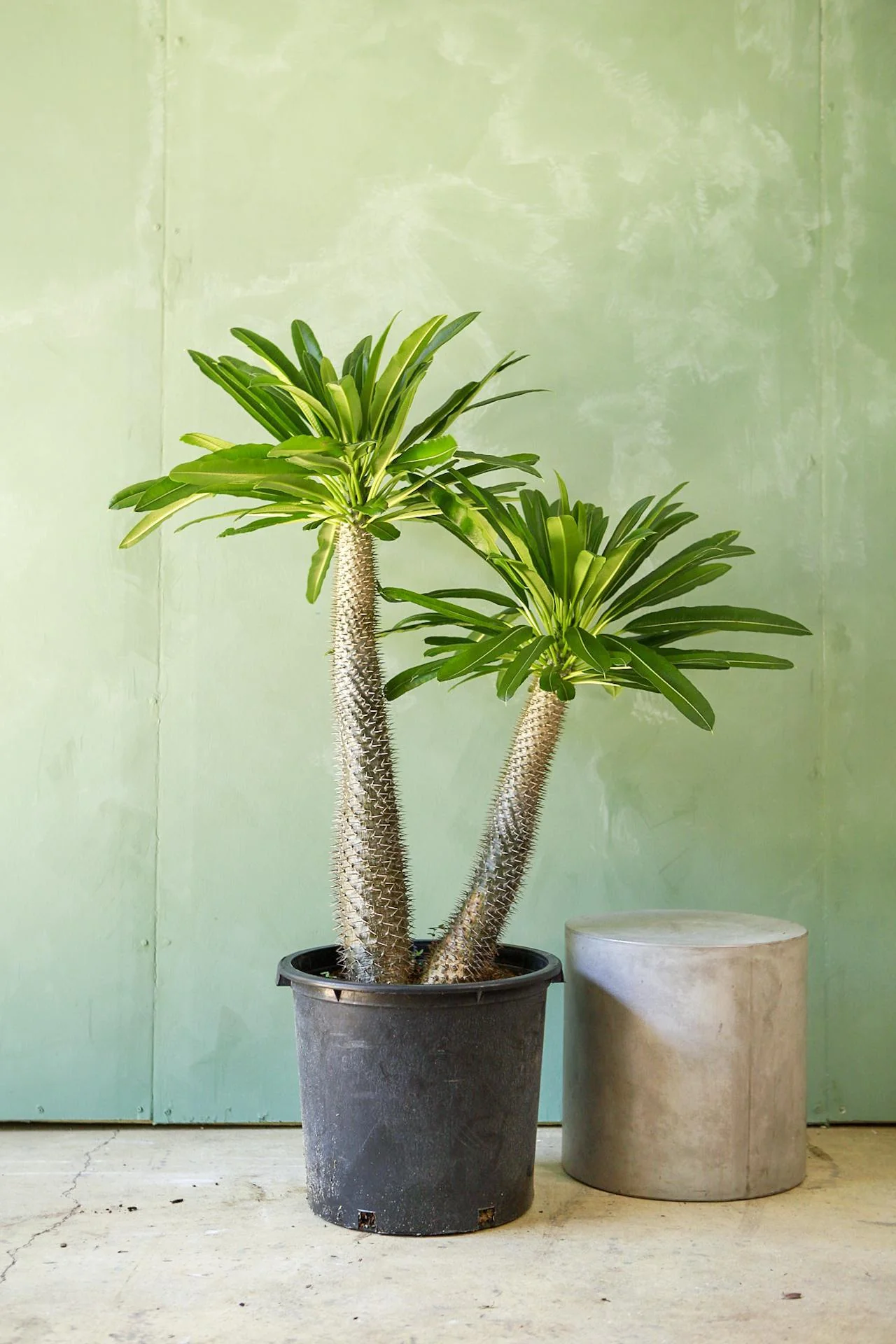
Madagascar Palm
The Euphorbia genus is one of the most morphologically diverse in the houseplant world. They’re often mistaken for cacti, although they can be leafy or bare, shrublike or columnar, towering or compact. Most will need at least some direct sun to stay happy, and many will thrive with full exposure. Like cacti and other succulents they enjoy being pot-bound, tend to be drought tolerant, and are more prone to over- than under-watering. All Euphorbia have a sticky, milky white sap that can irritate skin and can be very dangerous if ingested or exposed to the eyes. In the outdoor plant world, Euphorbia are more commonly known as spurges.
Original: $18.00
-70%$18.00
$5.40Product Information
Product Information
Shipping & Returns
Shipping & Returns
Description
The Euphorbia genus is one of the most morphologically diverse in the houseplant world. They’re often mistaken for cacti, although they can be leafy or bare, shrublike or columnar, towering or compact. Most will need at least some direct sun to stay happy, and many will thrive with full exposure. Like cacti and other succulents they enjoy being pot-bound, tend to be drought tolerant, and are more prone to over- than under-watering. All Euphorbia have a sticky, milky white sap that can irritate skin and can be very dangerous if ingested or exposed to the eyes. In the outdoor plant world, Euphorbia are more commonly known as spurges.